
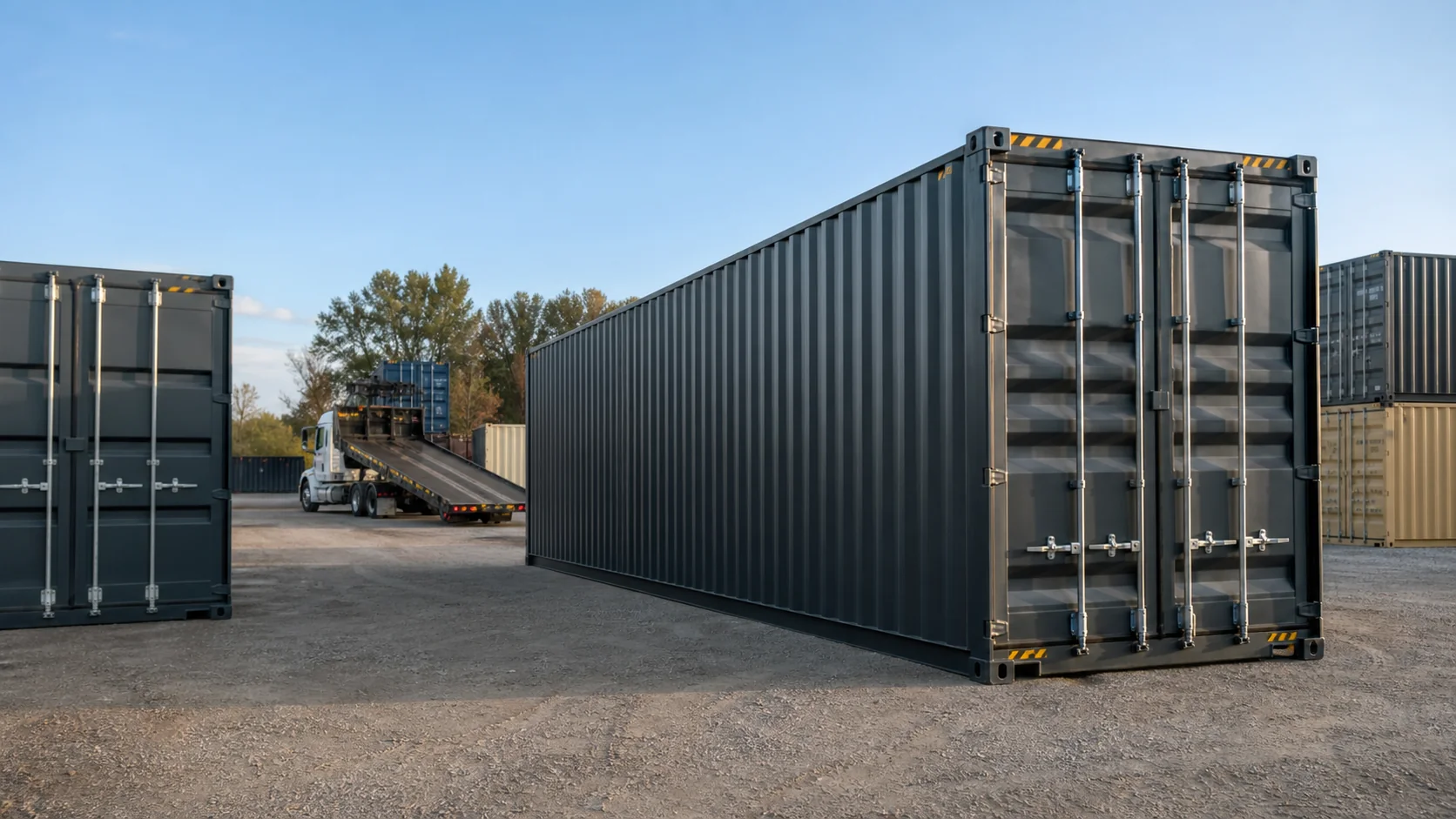
Steel shipping containers give businesses a fast, secure way to add weather-resistant storage without constructing a permanent warehouse. The right choice starts with what will be stored, how often people need access and how the delivery truck can reach the placement area.
Steel shipping container sizes and configurations
Standard 20-foot containers work well where space is limited or inventory turns frequently. A 40-foot container provides roughly twice the floor area, while a 40-foot high-cube adds interior height for bulky materials, shelving or equipment. Confirm internal dimensions, door opening and payload limits rather than choosing from nominal length alone.
Common commercial uses
- Construction tools and material security
- Retail and seasonal inventory overflow
- Farm supplies and equipment storage
- Documents, parts and maintenance stock
Questions to settle first
- Purchase, rental or lease duration
- One-trip, cargo-worthy or wind-and-water-tight condition
- 20-foot, 40-foot or high-cube dimensions
- Delivery access, surface preparation and placement
New, one-trip and used shipping containers
A one-trip container normally has minimal wear because it has completed one cargo movement from the factory. Used containers may show dents, surface rust, patches or floor wear, but a carefully inspected unit can remain an economical commercial storage container. Review door alignment, locking bars, gaskets, corner posts, roof condition, flooring and signs of daylight or water intrusion.
Delivery access and site preparation
Container delivery is part of the purchase decision. Tilt-bed and roll-off trucks need adequate turning room, straight-line unloading distance, firm ground and clearance from trees, wires, fences and structures. Prepare a level, well-drained placement area and support the container at structurally appropriate points so the doors continue to operate correctly.
What belongs in a shipping container quote?
| Quote item | Confirm in writing |
|---|---|
| Container | Length, height, age or condition grade, color and specific unit availability. |
| Condition | Door operation, seals, floor, roof, walls, structural members and inspection terms. |
| Delivery | Carrier type, mileage, unloading method, site-access assumptions and placement limits. |
| Terms | Purchase, rental or lease price; deposit; minimum term; pickup; taxes and optional accessories. |
| Site | Customer preparation, permits, setbacks, supports, anchoring and modification responsibility. |
Container safety and modification planning
Freight containers are engineered transport equipment. The International Convention for Safe Containers explains the international safety framework behind approved freight containers. If a container will be cut, stacked, occupied or permanently converted, involve qualified local design and permitting professionals before modifying structural panels or corner assemblies.
Steel shipping container questions
How much do steel shipping containers cost?
Container prices vary by size, condition, inventory, delivery distance and whether the unit is purchased, rented or leased. A useful quote identifies the container and delivery scope together.
Should I buy a new, one-trip or used shipping container?
One-trip containers generally offer the cleanest condition and longest remaining service life. Used containers can provide strong storage value when doors, seals, floors, roof panels and structural members are inspected carefully.
How much room is needed for container delivery?
The carrier needs a firm approach, adequate width and overhead clearance, plus enough straight-line room to tilt and set the container safely. Confirm the truck type and exact access requirement before ordering.
Do shipping containers require a foundation?
Many storage installations use level compacted gravel, concrete pads or properly placed supports at the corner castings. Local code, soil, drainage, intended use and modification plans determine the appropriate preparation.